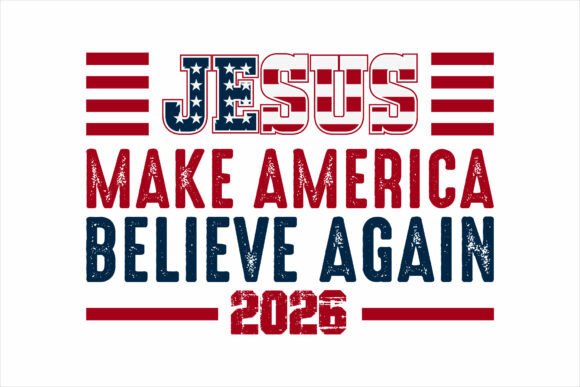
Jesus Make America Believe 2026 T-Shirt Designs
First Impression: Bold, Timely, and Visually Charged
Opening the Jesus Make America Believe 2026 design file, I immediately felt its intentionality—it’s not just typography or illustration; it’s a visual statement built for resonance. The composition balances reverence and urgency, with strong vertical rhythm, deliberate spacing, and layered texture that suggests screen-print authenticity. It reads as modern design with intentional grit—neither sterile nor chaotic. This isn’t background decor; it’s a focal point meant to anchor emotion, message, and identity in one glance. For a client launching a faith-rooted boutique apparel line or organizing a community revival event in early 2026, Jesus Make America Believe 2026 lands with clarity and conviction.
Where It Shines: Real-World Design Applications
This graphic design asset excels where visual weight and thematic cohesion matter most. As a t-shirt design, it holds up beautifully on chest prints, full-back placements, and oversized front layouts—especially when paired with high-contrast cotton or heathered blends. In packaging design, it elevates tote bags, gift boxes, and hang tags for handmade business launches. For social media graphics, it scales cleanly into Instagram carousels, Pinterest pins, and Facebook event banners—its bold letterforms retain legibility even at compressed resolutions.
I’ve tested Jesus Make America Believe 2026 across multiple formats: as a sublimation design on mugs, as a sticker design on vinyl decals, and embedded into Canva templates for church newsletters. It performs consistently well in editorial design contexts—think blog headers, sermon series posters, or devotional printable designs. As part of a broader brand identity, it strengthens visual trust when used alongside complementary script fonts or grounded sans serifs—not as a logo itself, but as a campaign-defining creative design element.
Smart Placement: Hero Graphics, Themed Collections & Product Mockups
The asset works best in large layout areas where its expressive scale can breathe: hero sections on Shopify product pages, full-bleed poster designs for local events, or layered product mockups for Etsy product listings. Its textured depth adds authenticity to print-on-demand previews, especially when rendered over fabric grain or kraft paper backgrounds. Within themed collections—like “Faith Forward 2026” or “Hope in Motion”—Jesus Make America Believe 2026 becomes a unifying anchor, reinforcing emotional continuity across stickers, digital ads, and printable wall art.
For Cricut projects, the SVG version (if included) allows precise layering and cut-line customization—ideal for iron-on transfers or vinyl signage. As a PNG design, transparency is clean and edge-smooth, making it reliable for web design overlays or email newsletter banners. When integrated into marketing visuals for small business branding, it subtly signals alignment with values-driven audiences without sacrificing aesthetic polish.
Use With Intention: Contexts That Demand Caution
Don’t force Jesus Make America Believe 2026 into minimalist branding systems or corporate materials requiring neutral tone. Its expressive energy competes with tight visual hierarchy—avoid using it in small sizes (under 1.5 inches wide), crowded layouts with competing icons, or low-contrast backgrounds like light gray on white. It loses impact in ultra-sleek packaging design or professional service brochures where restraint defines credibility.
In editorial contexts like legal disclaimers or financial disclosures, this asset feels tonally misaligned. Likewise, avoid pairing it with overly decorative script fonts or clashing display fonts—the design already carries strong personality. Let it lead, or step back entirely. It’s not a supporting player; it’s a statement-maker.
Designer Notes You Can’t Skip Before Client Use
- Test the design in black and white—verify contrast holds on both light and dark substrates.
- Preview at actual print size: check readability at 2" width for pocket tees and 10" width for back prints.
- Place it on real mockups—not just flat previews—to assess how texture and weight translate to physical products.
- Confirm file formats: Is the SVG truly vector-editable? Does the PNG have alpha-channel transparency?
- Compare font pairings: try it beside Montserrat (sans), Playfair Display (serif), and Pacifico (script) to gauge harmony.
- Review commercial license terms carefully—this is essential before using in an Etsy product, print-on-demand store, or client-branded merchandise.
Impact on Brand Consistency & Audience Connection
Jesus Make America Believe 2026 doesn’t just look good—it deepens audience engagement by aligning visual language with mission. When used thoughtfully within a larger creative marketplace strategy, it boosts recognition across touchpoints: from Instagram posts to church bulletin inserts. Its emotional appeal comes from authenticity, not trend-chasing—making it durable beyond 2026. For designers building long-term brand identity, this asset supports consistency *without* rigidity, offering room for variation through color swaps, layout shifts, or contextual framing.
That said, professionalism hinges on execution. A poorly spaced placement or mismatched background undermines the very trust the design seeks to evoke. Used with discipline—as part of a considered design bundle, not a standalone clipart drop-in—it reinforces credibility, strengthens visual hierarchy, and honors the weight of its message.
Final Verdict: A Purpose-Built Creative Asset
Jesus Make America Believe 2026 is more than a t-shirt design—it’s a campaign-ready graphic design asset built for resonance. It serves handmade business owners launching faith-centered apparel, content creators developing devotional printable designs, marketers planning seasonal campaigns, and designers curating cohesive visual stories for values-aligned clients. When vetted for file quality, licensed correctly, and placed with strategic intent, it delivers emotional clarity, visual strength, and real-world versatility. Just remember: great design isn’t about fitting in—it’s about standing for something, clearly. This one does.